One of the major advantages of buying Iran crude is the additional credit period of 90 days that the country gives to India, compared to 30 days by other countries.

'There is a huge tax differential of 15% to 20% depending on income classification.'
The top three companies in terms of the largest value of physical shares showed over 30 per cent shares are held in physical form. Two of the top three were part of the S&P BSE Sensex and the Nifty50 indices.

As fuel prices surged in September, the government's decision to ask companies to cut price by Rs1 each on a litre of petrol and diesel came as a dampner for private players.
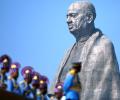
ONGC, Hindustan Petroleum, Bharat Petroleum, Indian Oil and Oil India listed the spending as part of their mandatory CSR commitment, but CAG noted that the Sardar Patel statue did not qualify for CSR funding.

As the national transporter is planning to come out with semi-high speed routes where trains can clock an average speed of 160-200 kmph, dedicated testing becomes essential.

The railways, the country's largest employer, will be hiring 127,000 people in 2018-2019, for which 23.7 million are competing.

Most NBFCs will have to slow down their loan growth. Some of the most leveraged will have to sell a part of their assets (or loan book) to banks to raise incremental capital. Others may have to knock on the door of their deep-pocketed parents.

Coalition governments aren't necessarily a negative for the economy, though they can result in negative outcomes in the stock market if not already priced in before elections.

The saffron party will use Lord Ayyappa the same way it made use of Lord Ram in the north to take away the Nair vote and make electoral inroads in the state.

The finance ministry has short listed 11 PSUs for a possible buyback of shares in the ongoing financial year
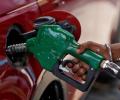
At present, India has 56,999 fuel outlets. Of those, only 6,276 are owned by private companies
The benchmark Indian crude oil basket is now estimated to average $77.88 a barrel for FY19, compared to the government's earlier estimate of $65 a barrel for the year and $56.39 for FY18
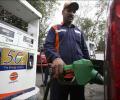
Senior policymakers say it is a tough task and the finance ministry may resort to the time-tested method of carrying forward part of the subsidy payment burden to the next fiscal year.

Total net debt-equity ratio improves for third consecutive year, while investment in new projects hits a 10-year low, says Krishna Kant.
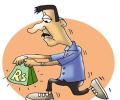
27 large listed firms give double-digit hikes to top executives despite a decline in net profit.

Second-tier NBFC stocks are trading at 24.4x their trailing earnings, which is nearly twice their 15-year average of 13.9x

Just before the 2008 financial crisis made headlines, Indian companies were on a global buying spree. In the fifth part of the series, Dev Chatterjee and Krishna Kant discuss how the crisis came as a black swan event for some, changing the mood from exuberance to despair.
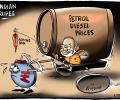
The Central government is stuck between the devil and the deep blue sea as far as the runaway fuel prices are concerned.

The US market regulator Securities and Exchange Commission was doing what it could to stem the flow. It temporarily prohibited naked short-selling in the securities of major financial players including Freddie Mac and its sister firm Fannie Mae in July. But this didn't really help. It was only after global central banks pumped in unprecedented liquidity into global markets, that the storm was finally calmed.
 © 2026 Rediff.com - Investor Information - Advertise with us - Disclaimer - Privacy Policy - Sitemap - Feedback - About us - Terms of use - Grievances